
Why Investing in a Refurbished Ultrasound System and Certified Pre-Owned Assets Drives Long-Term Clinical Value and Procurement Efficiency
1. Navigating Modern Healthcare Financial Pressures Through Strategic Asset Acquisition
In many clinical settings, hospital administrators face a persistent, dual-sided challenge: patient volumes are rising, yet capital expenditure budgets face unprecedented restrictions. This economic reality forces procurement teams to look beyond the traditional path of buying exclusively brand-new, top-tier machinery. When we look closely at private clinics, regional community hospitals, and expanding emergency departments, the financial burden of purchasing factory-new diagnostic imaging suites can delay critical service expansions for months or even years. Turning toward used medical equipment procurement bridges this operational gap. By integrating fully certified, pre-owned diagnostic systems into the facility, healthcare organizations can expand their clinical capabilities immediately. This strategic shift prevents long lead times, avoids hefty initial depreciation, and frees up capital that can be better allocated toward specialized nursing staff, advanced infection control protocols, or daily disposable medical consumables.
2. Clinical and Technical Viability of Refurbished Ultrasound Systems in Daily Diagnostics
What we often see in hospitals is that a refurbished ultrasound system can deliver the exact same diagnostic accuracy as a newly manufactured unit, provided it undergoes rigorous OEM-standard recalibration. Modern ultrasound technology relies heavily on transducer crystalline integrity and software-driven processing algorithms. When a reputable vendor refurbishes these systems, they replace worn elements, restore piezoelectric crystals in the probes, and update the software architecture to ensure optimal signal-to-noise ratios. In practice, this means an OB/GYN tracking fetal development or a urologist monitoring prostate health receives crystal-clear, high-definition visualization of soft tissues without compromise. The acoustic output and Doppler sensitivity remain fully compliant with clinical guideline awareness standards, such as those established by the American Institute of Ultrasound in Medicine (AIUM). Clinicians can confidently track deep tissue vascularity or guide regional anesthesia needles, knowing the imaging fidelity matches original factory specifications.
3. Enhancing Surgical Precision with a Cost-Effective Electrosurgical Unit
Moving from the imaging suite into the operating room (OR), the financial and operational logic of pre-owned equipment remains equally compelling. An electrosurgical unit (ESU) is a staple of general surgery, ENT, and orthopedic procedures, relying on high-frequency electrical currents to cut tissue and control bleeding through coagulation. Purchasing a cost-effective electrosurgical unit from a verified refurbishing partner allows surgical centers to acquire advanced monopolar and bipolar capabilities at a fraction of the cost. From a nursing and surgical technician perspective, these units are thoroughly tested for patient plate monitoring safety, leakage currents, and RF output stability. The clinical mechanism remains identical to new models: precise thermal delivery that minimizes collateral tissue damage and ensures mucosal safety during delicate head and neck surgeries or deep pelvic dissections. This ensures that the surgical team retains access to reliable vessel sealing and pure cut modes without the steep capital premium.
4. Upgrading Diagnostics with a Refurbished Digital X-Ray System
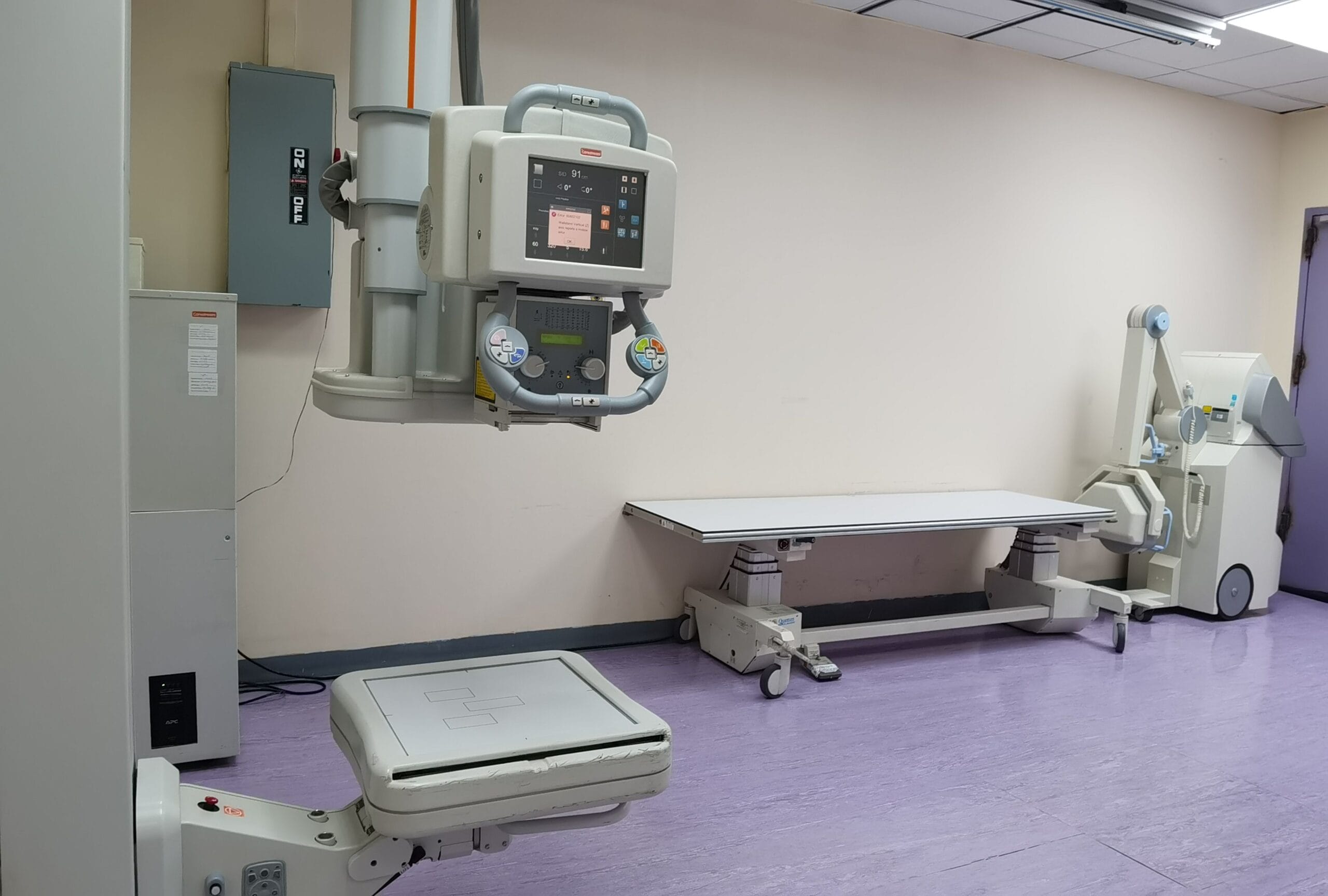
The transition from analog film or computed radiography (CR) to direct digital radiography (DR) is essential for modern workflow efficiency, yet the cost of new DR suites can be prohibitive for smaller community health centers. Integrating a refurbished digital X-ray system offers a balanced alternative that drastically improves patient throughput. The clinical mechanism center on advanced cesium iodide or gadolinium oxysulfide flat-panel detectors, which capture high-resolution skeletal and thoracic images at a significantly lower radiation dose than older systems. In busy emergency rooms and orthopedic clinics, where rapid triage is critical, having a digital system means images appear on the technician’s console within seconds. This rapid availability accelerates clinical decision-making, streamlines postoperative care assessments, and shortens the time patients spend in pain while waiting for diagnostic confirmation. The workflow efficiency gained by eliminating physical cassette processing directly translates into a reduced labor burden for radiologic technologists.
5. Comparative Analysis: Certified Refurbished Equipment vs. Unverified Used Assets
| Operational and Clinical Metrics | Certified Refurbished Equipment | Unverified Used Medical Assets | Factory-New OEM Systems |
| Upfront Capital Expenditure | Moderate (40-60% savings vs. new) | Very Low (High risk of hidden costs) | Extremely High (Full retail pricing) |
| Regulatory Compliance & Safety | Fully calibrated to FDA/CE standards | Unknown compliance, high risk | Guaranteed compliance out of box |
| Warranty & Technical Support | 6 to 12 months comprehensive warranty | Sold “as-is”, no technical recourse | 12 to 24 months standard warranty |
| Component Reliability | Wear items, batteries, and probes replaced | Original worn components remain intact | Brand new components throughout |
| Integration with Hospital PACS | Fully verified and updated DICOM software | Potential software incompatibility issues | Seamless modern IT integration |
In practice, this comparative framework illustrates that certified refurbished items are not merely “used” machines, but rather systematically rebuilt clinical assets that provide a safe, reliable middle ground for hospital finance departments.
6. Supply Chain Integrity, Infection Control, and Lifecycle Management
A critical concern during used medical equipment procurement is maintaining strict adherence to hospital infection control policies and device sanitation. Reliable medical asset refurbishers follow stringent decontamination workflows that mimic original manufacturing environments. Every chassis is dismantled, internal cooling fans (which can harbor bio-burden and dust) are replaced, and exterior housings are treated with medical-grade, non-corrosive disinfectants to ensure complete mucosal safety and eliminate cross-contamination risks. Furthermore, from a lifecycle management perspective, purchasing certified pre-owned units helps hospitals align with global sustainability initiatives by reduction of electronic waste. Rather than discarding perfectly viable titanium casings, transformers, and structural components, the medical industry extends the operational life of complex machinery, fulfilling WHO recommendations for medical device accessibility in resource-limited settings while protecting the hospital’s bottom line.
📚 References
- World Health Organization (WHO). (2021). WHO guidance on post-market surveillance and vigilance for medical devices. Geneva: World Health Organization.
- American Institute of Ultrasound in Medicine (AIUM). (2023). Clinical Guideline for the Performance of Diagnostic Ultrasound Examinations. Journal of Ultrasound in Medicine, 42(3), 511-525.
- ECRI Institute. (2024). Top 10 Health Technology Hazards: Navigating Safe Medical Device Procurement and Refurbishment. ECRI Healthcare Product Alerts.